
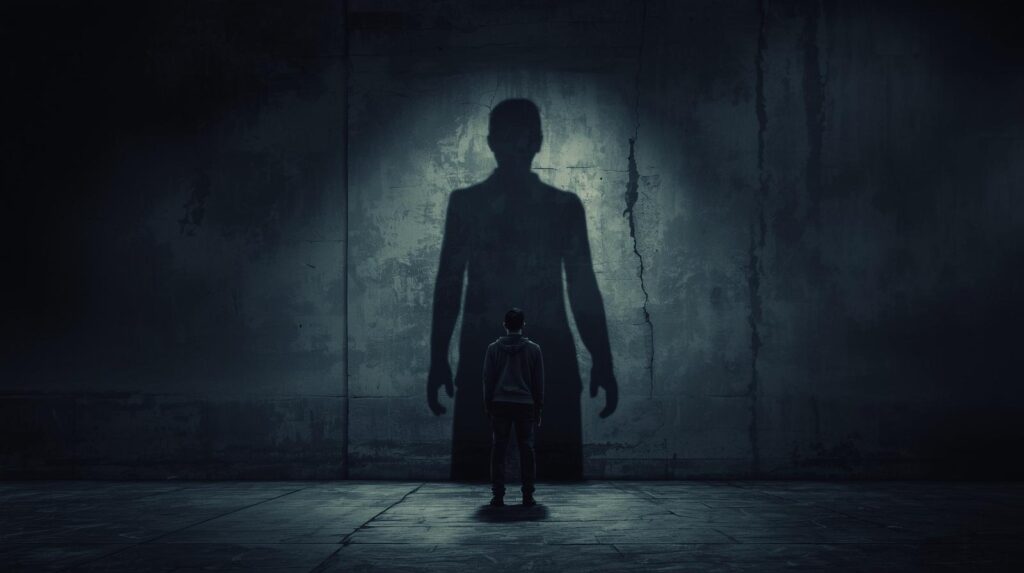
Why We Keep Running From Problems But End Up in the Same Mess
Here’s the ridiculous part: you spend half your life dodging certain people or situations like you’ve finally figured out how to protect your peace… and then somehow you still end up right back in the same mess, blinking like, “How the hell did I get here again?” It’s almost funny. Almost. You see the red flags, you feel your stomach drop, and you still walk toward it like an idiot who believes the sequel will magically be different from the original. Fear doesn’t push things away — it doesn’t even try. It sort of stands in the corner, arms crossed, watching you circle the drain again, muttering, “Yeah, I knew you’d come back.” And there you go, proving it right. Every. Damn. Time.
How Fear Takes Over Your Thoughts and Quietly Redirects Your Life
And here’s where it gets even dumber: the more you swear you don’t want something, the more your mind won’t shut up about it. Whatever scares you becomes the thing you obsess over in the shower, on the bus, lying awake at 2AM replaying imaginary disasters like they’re movie trailers. You analyse it from every angle, as if overthinking ever saved anyone. And all that attention? It tricks your brain into thinking this thing — this person, this situation — is inevitable. Like it’s already on its way. Fear isn’t a warning; it’s a damn navigation system. You keep telling yourself, “I don’t want that, I don’t want that,” and your mind just hears the name of the destination and goes, “Alright then, let’s take you right back there.”
The Subtle Body Language That Exposes Fear and Attracts the Wrong People
And the funniest part? Your body rats you out long before your brain even realises you’re spiralling. You tense up, you overthink your breathing, your voice gets that shaky little wobble you hope nobody notices. You become careful — too careful — like you’re trying not to set off a landmine. But people who carry the same energy you fear? Oh, they spot it instantly. The confident ones, the chaotic ones, the ones you should absolutely stay away from — they read that hesitation like it’s printed on your forehead. Fear tweaks your posture, your reactions, your whole damn vibe, and suddenly you’re behaving in a way that practically waves them over. You don’t mean to invite trouble, but your body does it for you with a sweet little smile.
Why Familiar Pain Feels Like Attraction (And How Past Trauma Shapes Your Type)
The sad thing is, most of the time you’re not even drawn to the person — you’re drawn to what feels familiar. You meet someone and something in you quietly says, “Yeah… this feels like home,” and you don’t stop to question why “home” has always been a bit of a war zone. Old wounds don’t disappear; they just get better at choosing your partners for you. So you end up chasing the same emotional pattern again and again, not because it’s good for you, but because your brain is convinced comfort means “what I already know.” And when the whole thing blows up in your face, you shrug and call it bad luck, as if you didn’t walk straight into another repetition of your own history. It’s not fate. It’s habit dressed up as attraction.
How Fear-Based Expectations Sabotage Relationships Before They Even Start
And then there’s the part nobody likes admitting: half the damage comes from what we expect before anything even happens. If you’re convinced someone will betray you, you hold back, you second-guess, you watch them like a threat — and sooner or later, they feel it. If you’re terrified someone will leave, you latch on too tight, you smother, you panic at every tiny shift. If you’re bracing for a fight, your whole body tenses, your tone sharpens, and suddenly the other person is on edge. Fear isn’t passive. It creeps into your behaviour until you’re unknowingly steering everything straight toward the outcome you swore you didn’t want. Keep rehearsing a disaster long enough, and eventually you stop noticing you’re the one building the stage for it.
Why Some People Are Drawn to Fear and Vulnerability
And here’s the part nobody likes to talk about: some people actually look for fear in others. It’s like a scent to them. Vulnerability, hesitation, that tiny shake in your voice — they pick it up instantly. The ones who love control, who thrive on being the dominant force in the room, they’re drawn to it. So fear doesn’t just pull you back into old patterns… it invites in people who know exactly how to use those patterns against you.
How to Break the Fear Cycle and Stop Attracting the Same Story
So maybe life isn’t out to get you after all. Maybe you’re not cursed, unlucky, or doomed to meet the same disaster in different clothes. Maybe your fear is doing the introductions — pointing, nudging, whispering, “This one feels familiar. Go on.” And until you finally stop fixating on what you don’t want, you’ll keep attracting the same story with a new face, a new name, and the same ending you swore you were done with. It’s not fate. It’s focus. Change that, and everything else stops repeating.
Here’s the Truth You Can’t Keep Running From
- If the story keeps ending the same way, maybe stop casting the same characters.
- Fear isn’t psychic — it just keeps dragging you back to the crap you never dealt with.
- If “familiar” feels comfortable, check whether it ever actually saved you
- Your patterns don’t need closure — they need you to stop feeding them.
- If someone feels like home, make sure home wasn’t a demolition site.
- Fear whispers garbage; stop treating it like gospel.
- If you walk in expecting drama, don’t act shocked when the curtains rise.
- Changing your life isn’t complicated — just stop choosing the option labelled “pain.”
Fear doesn’t just drag you back to toxic people — it also tricks you into treating tiny tasks like horror scenes. If you want to see the chaos from another angle, read The Psychology of Making Everything Harder Than It Has to Be
If you like psychological hits that leave a bruise, subscribe.
I’ll keep supplying the good stuff.